NMC's Post-Graduate Medical Education Board has issued another round of amendments to the Post-Graduate Minimum Standards of Requirements, 2023 (PGMSR-2023), effective immediately from 20th February 2026. If you're involved with a PG programme in any capacity, here's what actually changed.
A quick history
PGMSR-2023 was first notified on 16th January 2024, then amended on 23rd August 2024 and again on 14th January 2025. This is the fourth version. Each round has tightened or clarified requirements around infrastructure, faculty, equipment, and clinical facilities for institutions running postgraduate medical courses.
The headline changes in this amendment
Hospital and infrastructure norms
Hospital buildings must conform to national building norms and local statutory regulations, covering everything from OPD and operating theatres to ICU and radiology. At least 80% of hospital beds should be occupied year-round by patients requiring inpatient care, and a minimum of 15% of beds in each PG-training department must be ICU or High Dependency Unit beds.
Digital records and infrastructure
Patient records — admissions, discharges, deliveries, surgeries, procedures, births, deaths — must be digital, with ICD classification for MRD records. Departments also need a digital library and seminar hall with high-speed internet capable of relaying live operation theatre feeds and global scientific programs.

Meeting the updated infrastructure norms usually means a coordinated push across clinical and administrative teams alike.
Faculty can't do private practice during college hours
This is one worth flagging directly: faculty must be full-time and cannot engage in private practice during college working hours, including lunch and other breaks (except where state government rules specifically permit it outside working hours). Minimum 75% attendance is now mandatory across a 300-day working year — and if a faculty member leaves mid-year and a replacement joins, cumulative attendance of 75% is still what's assessed.
College websites now need to disclose a lot more
Every college must maintain a website disclosing department-wise facilities, PG course seat numbers, faculty lists for the last three years (with designation, joining date, and leaving date), admitted student details for the last three years, and OPD/bed occupancy/surgery statistics — updated in the first week of every month. We've covered this specific requirement in more detail separately, since it directly affects how transparent a college is before you even apply.
CCTV and AEBAS attendance
Prescribed CCTV coverage is now mandatory at prescribed locations, and all faculty, senior residents, and junior residents must mark attendance via AEBAS (Aadhaar Enabled Biometric Attendance System) as per NMC's guidelines.
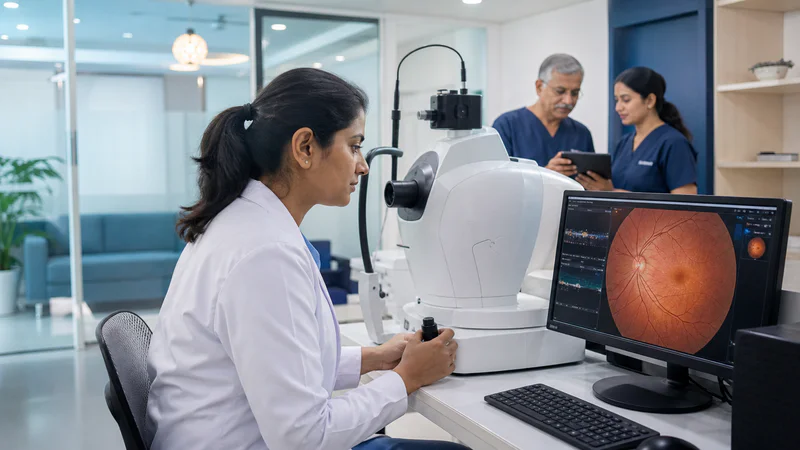
Attendance and compliance rules ultimately aim to keep operating teams like this one fully staffed and accountable.
Faculty-to-student ratios and bed/faculty requirements
The amendment also sets out detailed ratios of PG faculty to student intake, and minimum bed and faculty requirements per specialty — different for government versus non-government colleges. Given how specific these numbers are, we've broken them down in a separate post.
Who needs to act on this
Any institution conducting postgraduate teaching — including standalone PG institutes — needs to review compliance against these updated norms now, since the amendment is already in force.
How this amendment fits into the bigger regulatory picture
PGMSR-2023's four versions in roughly two years reflect a broader pattern in how NMC has been operating since the Act came into force: rather than issuing a single static rulebook, the Commission has been iterating on minimum standards as gaps or compliance issues surface — the digital-records and CCTV additions in this round, for instance, mirror the same push toward verifiable, technology-backed compliance that shows up in NMC's separate ABDM-HMIS integration directive and its AEBAS attendance mandate for undergraduate faculty. Institutions that treat each amendment as a one-time checklist rather than tracking the underlying direction of travel tend to fall behind by the time the next version lands.
Frequently asked questions
Does this amendment apply retroactively to PG students already admitted?
The amendment governs institutional compliance — infrastructure, faculty, digital records, and so on — rather than individual student status, so it applies to how the institution operates going forward from 20th February 2026, not to reopening the standing of students already admitted under earlier norms.
What happens to a college that doesn't meet the new ICU bed percentage requirement?
Shortfalls against MSR requirements are typically identified during MARB's assessment and renewal process and can affect a college's rating or permitted intake, in the same way other infrastructure or faculty shortfalls do — this amendment doesn't describe a separate, distinct penalty track just for the ICU-bed requirement.
Is a fifth amendment to PGMSR-2023 likely?
Given the pace so far — four versions in roughly two years — further amendments are a reasonable expectation rather than an exception. Institutions are better served checking NMC's notifications periodically rather than assuming the current version is final.
Institutions unsure whether a specific requirement above applies to them should check the applicability clause in the full notification directly, since some provisions phase in differently for colleges already running PG courses versus those applying fresh.