Many doctors consider academic medicine at some point — often after a few years of clinical practice, when teaching, mentoring or research starts to feel like the more compelling direction. The move is significant, but it is rarely as disruptive as it seems from the outside. Knowing what actually changes makes the decision, and the transition itself, considerably easier.
What changes day to day
The clearest shift is in how a week is structured. Clinical practice tends to revolve entirely around patient care. A faculty role adds teaching sessions, case discussions, ward rounds with students, exam duties, and departmental meetings into that same week — alongside continued clinical responsibilities, since most faculty positions in India remain clinically active roles rather than purely academic ones.
This means less flexibility in the short term, since teaching and academic commitments run on fixed institutional schedules. In exchange, most doctors report more structured working hours overall, since a college timetable is generally more predictable than a busy private clinical calendar.
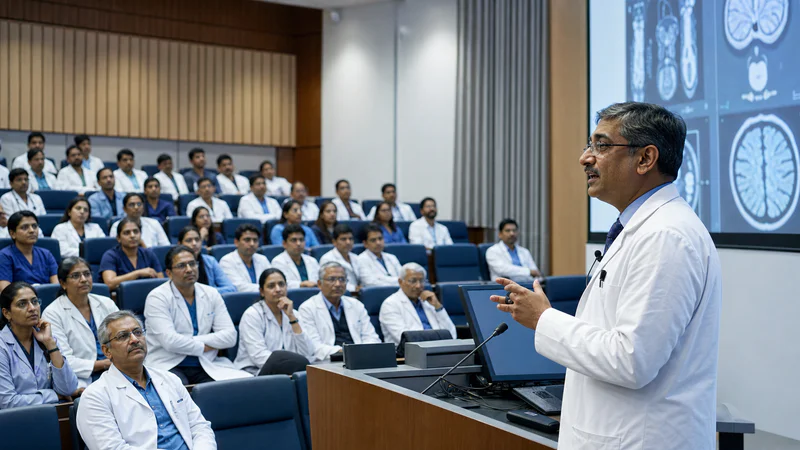
Research becomes part of the job, not an extra
In private clinical practice, research is usually optional. In academic medicine, it is an expected part of the role, particularly for career progression through the designation ladder. This does not mean every faculty member needs to run a full research programme from day one — case reports, clinical audits, and departmental publications are all reasonable starting points, and most institutions expect this contribution to build gradually over the first few years.
Income and stability look different
Compensation structures in academic institutions — particularly government and many private medical colleges — tend to be more standardised than private clinical income, with defined pay scales tied to designation. For doctors coming from high-earning private practice, this can mean an initial adjustment. What it offers in return is a more predictable, long-term career structure, along with institutional benefits that vary by employer.

The eligibility question comes first
Before any of the above becomes relevant, the practical first step is confirming eligibility for the designation being considered. NMC's Teacher Eligibility Qualifications set out the postgraduate qualification, experience, and — depending on designation — research requirements that apply. A preliminary eligibility check against your actual qualifications is worth doing early, since it shapes which designation and which institutions are realistically in reach at the current stage of a doctor's career.
A practical way to approach the decision
- Talk to current faculty at the seniority level being considered — the day-to-day reality varies more by institution than by specialty.
- Check eligibility against the current designation criteria before assuming a particular role is or isn't accessible.
- Start building a modest research contribution even before formally applying, since a case report or two already in progress makes the transition smoother.
- Expect the first year to be an adjustment, not a steady state — most of the schedule and workload settles once teaching responsibilities become routine.
The shift into academic medicine is a career change, not a departure from clinical work — most faculty roles keep doctors clinically active while adding teaching and academic responsibilities on top. Understanding that balance in advance is what makes the decision, and the first year in the role, considerably more manageable.
What a typical first year looks like, week to week
In practice, the first few months after transitioning usually involve the steepest adjustment — learning institutional processes, timetabling, and how teaching duties interact with existing clinical responsibilities. By the second half of the first year, most doctors report the schedule settling into a more predictable rhythm: fixed teaching sessions, ward rounds with students at set times, and clinical duties that, while still demanding, follow a more structured calendar than private practice typically does. The adjustment tends to be front-loaded rather than a permanent state.
Frequently asked questions
Is it possible to move back into purely private clinical practice after starting an academic role?
It's possible, though the ease depends heavily on the specific institution, contract terms, and how long the faculty role has been held — this is a career decision best discussed with the institution and, if relevant, understood in terms of any service bond or notice period attached to the appointment, rather than assumed to be freely reversible.
Do all academic faculty positions require the same research commitment?
No — expectations vary by designation and institution. Entry-level Assistant Professor roles generally expect research to build gradually, while higher designations and certain institution types (particularly those with active PG programmes) expect a more substantial and sustained research contribution from the outset.
What's the biggest misconception doctors have before making this move?
A common misconception is that academic medicine means stepping away from clinical work — in most Indian faculty roles, the opposite is true, since faculty positions generally keep doctors clinically active while adding teaching and academic responsibilities on top, rather than replacing clinical work with it.